


Healthcare Jobs That Don’t Require a Degree in 2026

Table of Contents

Many people want to work in healthcare but do not want to spend four or more years in college. That is where healthcare jobs that don’t require a degree come in. These roles allow you to enter the healthcare field faster, with focused training and industry-recognized certifications instead of a traditional degree.
In 2026, demand for entry-level healthcare jobs continues to grow as clinics, hospitals, and healthcare facilities look for trained professionals who can step into essential support roles. This guide explains which healthcare careers without college are realistic, what training and certification they require, and how people get started through programs administered by CALRegional and its partner schools.
Key Takeaways
- Many healthcare jobs that don’t require a degree rely on certifications, not college
- Some medical jobs without college can be completed in weeks or months
- Clinical and non-clinical healthcare jobs follow different training paths
- Online and in-person options exist, depending on the role
- Certification readiness matters more than degrees for many entry-level positions
Want To Learn More?
Program Availability and Certification Context
Healthcare training requirements vary by role and, in some cases, by state. Most healthcare jobs without a degree rely on industry certifications rather than academic credentials. These certifications confirm that you are prepared to perform job-specific skills safely and competently.
CALRegional administers healthcare certification programs through partnerships with local schools. Program availability may differ by state or partner location, but the roles outlined below represent common, widely recognized healthcare pathways that do not require a college degree.
Clinical vs Non-Clinical Healthcare Jobs Without a Degree
Before choosing a training path, it helps to understand the difference between clinical and non-clinical healthcare jobs without a degree. Both options allow people to enter healthcare without college, but the day-to-day work, training format, and work environment are very different.
Clinical Healthcare Jobs
Clinical roles involve direct patient care or hands-on medical support. These jobs are typically performed in clinics, hospitals, labs, or pharmacies.
Common traits of clinical roles:
- Hands-on patient interaction
- Skills-based certification preparation
- Fast-paced healthcare settings
Examples include phlebotomy technician, clinical medical assistant, pharmacy technician, and EKG technician.
Read More: Going Back to School for a Career in Healthcare
Non-Clinical Healthcare Jobs
Non-clinical roles support healthcare operations without providing direct patient care. These positions focus on administrative, technical, or billing-related work.
Common traits of non-clinical roles:
- No patient-facing responsibilities
- Online training often available
- Certification focused on systems and accuracy
- Office-based or remote work environments
A medical billing and coding specialist is a common example of a non-clinical healthcare job without a degree.
Why This Distinction Matters
Clinical and non-clinical paths require different comfort levels, schedules, and learning styles. Understanding the difference upfront helps students choose healthcare certification programs that fit their goals, availability, and work preferences.
Once this distinction is clear, it becomes easier to evaluate specific healthcare careers without college and decide which training path makes sense next.
Want To Learn More?
Healthcare Jobs Without a Degree, Role Breakdown
Phlebotomy Technician
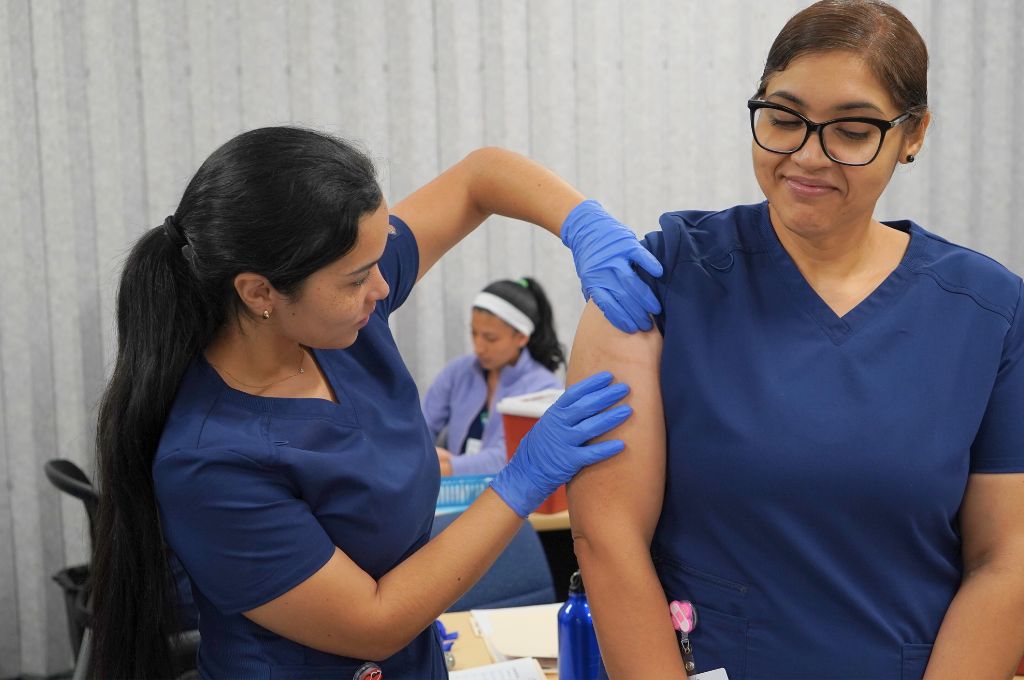
Phlebotomy technicians specialize in drawing blood for testing, transfusions, and medical procedures. This is one of the most in-demand allied health jobs without a degree.
What the role involves
- Collecting blood samples from patients
- Labeling and processing specimens
- Working in clinics, hospitals, labs, and blood centers
Read More: Real Talk: How Much Does a Phlebotomy Technician Make?
Training and certification
- Short-term healthcare training programs, often completed in 3-12 weeks
- Hands-on clinical training required
- Certification preparation included
Delivery format: In-person due to required clinical practice
Why it fits this list: Phlebotomy is a clear example of a medical job without college that leads directly to employment when certification requirements are met.
Clinical Medical Assistant
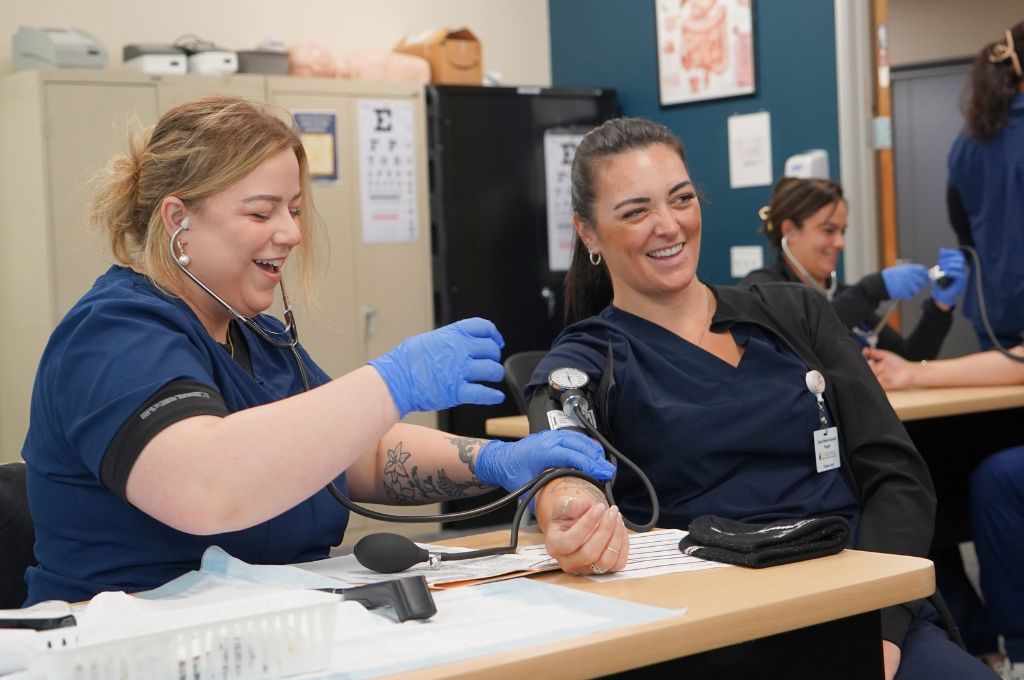
Clinical medical assistants support physicians and nurses by handling both clinical and administrative tasks in healthcare settings.
What the role involves
- Taking vital signs
- Assisting with exams
- Preparing patients and rooms
- Managing basic clinical documentation
Training and certification
- Structured healthcare certification programs
- Certification readiness is critical for employability
- Training emphasizes hands-on skills
Delivery format: Hybrid, with a mix of online coursework and in-person clinical training
Why it fits this list: This role offers broad exposure to healthcare environments and is often used as a stepping stone for career growth.
Pharmacy Technician
Pharmacy technicians assist licensed pharmacists with medication preparation and patient support.
What the role involves
- Preparing and labeling prescriptions
- Managing inventory
- Assisting customers and patients
Training and certification
- Short-term healthcare training enrollment options
- Certification preparation aligned with national standards
Delivery format: Hybrid, with a mix of online coursework and in-person clinical training
Why it fits this list: Pharmacy technician roles remain among the most stable healthcare jobs that don’t require a degree.
EKG Technician
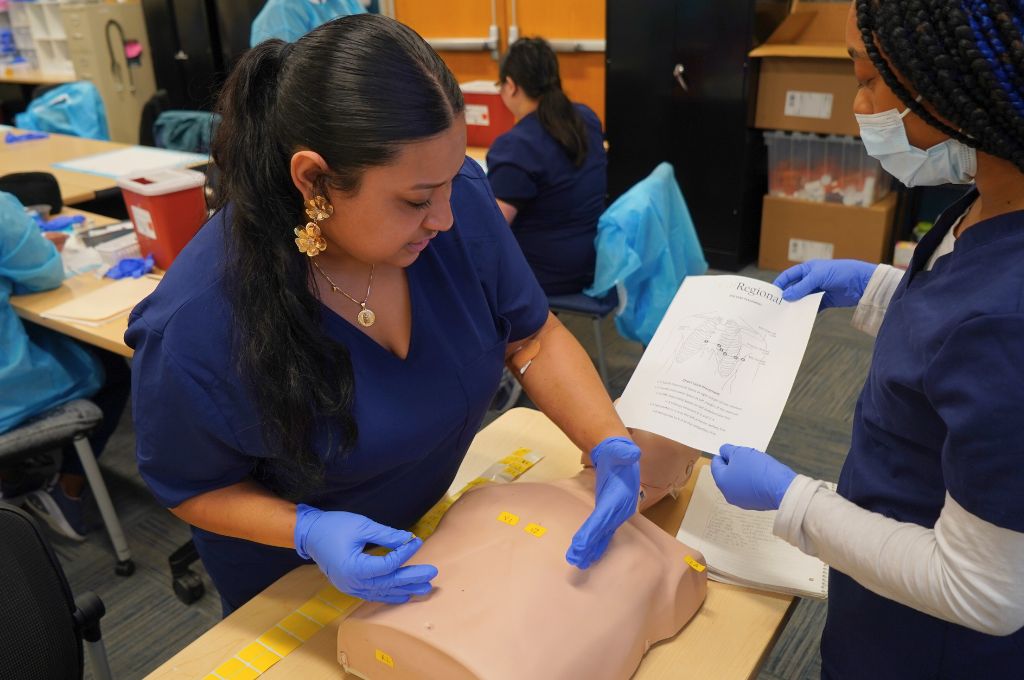
EKG technicians focus on cardiac monitoring and diagnostic testing related to heart health.
What the role involves
- Performing electrocardiograms
- Monitoring patient heart activity
- Preparing reports for physicians
Training and certification
- Focused certification training
- Emphasis on diagnostic accuracy and patient interaction
Delivery format: Online coursework with structured certification preparation
Why it fits this list: EKG technician roles are specialized, making them accessible through targeted training rather than college degrees.
Medical Billing and Coding Specialist
Medical billing and coding specialists work behind the scenes to ensure healthcare providers are reimbursed accurately.
What the role involves
- Coding medical procedures and diagnoses
- Submitting insurance claims
- Managing patient billing records
Training and certification
- Healthcare certification programs focused on coding systems
- No clinical patient care required
Delivery format: Fully online program option
Why it fits this list: This is one of the most common non-clinical healthcare jobs for people seeking remote or office-based work.
Why Certification Matters More Than Degrees
According to the U.S. Bureau of Labor Statistics, many healthcare support occupations commonly require a postsecondary nondegree award rather than a traditional college degree for entry. Employers prioritize certification readiness, clinical competence, and job-specific training over academic credentials.
Read More: Stack Credentials: Which Healthcare Certifications Pair Best
Many entry-level healthcare certifications are issued through nationally recognized organizations such as the American Medical Certification Association, which sets competency standards for several allied health roles.
Healthcare jobs with on-the-job training still expect foundational knowledge. Certification programs bridge that gap by preparing students for real workplace demands.
FAQs
Common options include phlebotomy technician, clinical medical assistant, pharmacy technician, EKG technician, and medical billing and coding specialist. These roles rely on certifications rather than college degrees.
Yes. Many healthcare careers without college focus on targeted skills and certification instead of academic degrees.
Pay varies by role, location, and experience. Specialized certifications and clinical roles often offer higher earning potential over time, especially with experience.
Conclusion: Choosing the Right Healthcare Path Without a Degree
Healthcare jobs that don’t require a degree offer a practical way to enter a growing field without long academic timelines. By choosing the right certification path and understanding the difference between clinical and non-clinical roles, you can make informed decisions that match your goals.
CALRegional administers healthcare training programs designed to prepare students for real entry-level healthcare jobs through its partner schools. Attending an information session can help you determine which path fits your situation.
Attend an Info Session
